AirPurifiers.com Releases 2026 Rankings of the Worst U.S. Cities for Allergy Sufferers
PR Newswire
NASHVILLE, Tenn., March 31, 2026
Boise, Laredo, and Tulsa Among the Ten Cities Where Climate Change, Wildfires, and Geography Are Making Allergies Harder to Manage
NASHVILLE, Tenn., March 31, 2026 /PRNewswire-PRWeb/ -- AirPurifiers.com today released its annual report identifying the ten worst U.S. cities for allergy sufferers in 2026. Drawing on proprietary research and data from their partners at the Asthma and Allergy Foundation of America (AAFA), the report finds that shifting climate conditions, increased wildfire activity, and local geography are extending pollen seasons and intensifying allergen exposure across the country.
Compared to 2025 rankings, several cities have shifted positions due to changing climate conditions. Warmer temperatures, intense rainstorms, and periods of drought have contributed to stronger pollen spikes and longer seasons, particularly across the West.
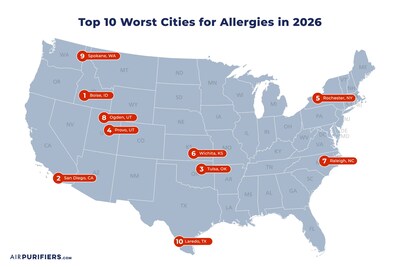
The 2026 Ten Worst Cities for Allergies:
- Boise, Idaho
- San Diego, California
- Tulsa, Oklahoma
- Provo, Utah
- Rochester, New York
- Wichita, Kansas
- Raleigh, North Carolina
- Ogden, Utah
- Spokane, Washington
- Laredo, Texas
The report highlights a range of environmental factors driving these rankings. In Boise, wildfires — including over 1 million acres burned in Idaho in 2024, the most in nearly a decade — have led to "ecosystem resets" where fast-growing, allergenic species replace native forests, shifting the region's allergen profile.
In Wichita, average wind speeds among the highest for major U.S. cities allow pollen and agricultural particles to travel hundreds of miles, keeping allergen concentrations consistently elevated.
Climate change is compounding the problem nationwide. Warming trends have lengthened pollen seasons by 21 days across North America, while elevated CO₂ levels are increasing pollen production. In Provo and Ogden, Utah, the state has warmed approximately 2.5°F since the early 20th century, contributing to a longer growing season and earlier pollen release.
Meanwhile, the Great Salt Lake has lost over 70% of its water volume, exposing large areas of dry lakebed and generating dust events that carry fine particulate matter and irritants into nearby communities.
"Where you live has a profound impact on how severely allergies affect your daily life," said Isabel Acebal, Writer at AirPurifiers.com. "Our 2026 report shows that the environmental forces driving allergen exposure — from wildfire smoke to drought-driven weed growth — are intensifying, and millions of Americans need to take proactive steps to protect their indoor air quality."
The report also offers guidance for allergy sufferers, recommending HEPA air purifiers, regular HVAC filter replacement, and monitoring daily pollen forecasts as key strategies for reducing exposure. For those with the flexibility to relocate, areas with shorter growing seasons, stable climates, and consistent coastal airflow — such as Seattle, Washington — tend to offer meaningful relief.
The full report, including city-by-city analysis and recommended air purifiers for allergy sufferers, is available at airpurifiers.com/allergies/2026-worst-cities-for-allergies.
Media Contact
Kelly Koeppel, AirPurifiers.com, 33 0766950733, kelly@k2forma.com, https://airpurifiers.com
 View original content to download multimedia:https://www.prweb.com/releases/airpurifierscom-releases-2026-rankings-of-the-worst-us-cities-for-allergy-sufferers-302729573.html
SOURCE AirPurifiers.com