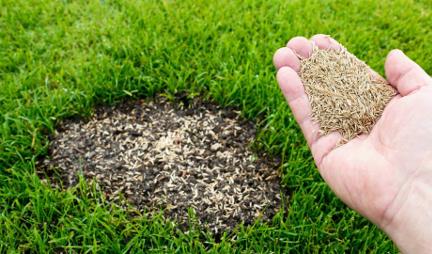
SPONSORED CONTENT -- (StatePoint) Even if you have lush, green grass, your lawn may still suffer from bare spots. These bare spots can happen for a variety of reasons, and when they do, seldom regrow on their own.
To achieve your dream lawn, Exmark, the lawn care equipment manufacturer, is providing a step-by-step guide for filling in the blank spaces.
Clearing Your Lawn
To give your new grass a fighting chance, the soil underneath needs to live its best life, first and foremost. That’s why your first step should be clearing your lawn of invasive weeds, dead grass, and thatch.
The Need to Reseed
Soil that’s become hard and compacted isn’t ideal for the seed germination needed to replace barren spots with fresh growth. So, use a good, heavy garden rake to loosen the soil two to three inches deep.
If your soil is dry, apply fresh topsoil to add a hearty mix of nutrients and grass-growing energy to the depleted ground. Work the new soil in with the old and you’re on your way.
Now that your soil has what it needs, you’re ready to apply new seed. Rake a seed type that matches your grass type into the soil. Be sure to follow the directions on the bag closely, as applying too many seeds in too small an area can cause the grass to grow to the point of choking itself out. This will land you right back to square one with a bare spot needing repair, so make sure to seed conservatively.
Boosting Your Soil
All plants require six essential nutrients: oxygen, carbon and hydrogen received from air and water, and nitrogen, phosphorus and potassium received from soil. Use a granular starter fertilizer to help deliver the latter three nutrients to your new grass. Just be sure to read the label, as every bag of plant food contains three numbers separated by dashes indicating the percentage of nitrogen, phosphorus and potassium the fertilizer contains. Each of these ingredients serves a different function for plant health, so understanding what combination your soil needs can help your grass grow lush and green.
Protecting New Grass
As new grass grows, it needs some extra protection. Lightly cover the area with straw to prevent birds from snacking and to retain moisture. You’ll want to keep your re-seeded area moist for at least a few weeks before new growth will appear, so water the area as needed. Sprigs of new grass will start appearing before you know it, but it’s important to wait a few more weeks before mowing to allow new grass to become established.
For more insights, watch “How to Repair Bare Spots in Your Lawn,” an episode of “Backyard Smart,” an original series from mower manufacturer, Exmark. To watch the video, visit Backyard Life, a unique multimedia destination with a focus on helping homeowners improve their outdoor living spaces. There you can download additional tips and view other Exmark Original Series videos.
“A flawless lawn is definitely achievable,” says Lenny Mangall, Exmark. “All you need to make bare spots on your lawn a distant memory is the right knowledge and a little bit of elbow grease.”